
Full-Height vs Café-Style Shutters: Which Suits Which Room?
If you’ve started shopping for plantation shutters, you’ve probably noticed the photos online don’t all show the same thing. Some homes have shutters running the full drop of the window, floor to lintel. Others have a shorter panel sitting halfway up the glass, with bare window above it. Neither is wrong — they’re built for different jobs, and after fitting both styles across hundreds of Perth homes, I can tell you the wrong choice in the wrong room is one of the more common regrets I see.
Let’s break down what full-height and café-style shutters actually do differently, and where each one earns its place.
The Core Difference: Coverage vs Control
Full-height shutters cover the entire window opening, from sill to head, usually built as one continuous panel or split into two operable sections (a “tier-on-tier” setup) so you can open the top independently of the bottom. Café-style shutters only cover the lower portion of the window — typically the bottom half to two-thirds — leaving the top section permanently uncovered.
The simplest way I explain it to clients: full-height is about complete control — light, privacy, and airflow, top to bottom. Café-style is about a compromise — privacy where you need it, while still letting natural light flood in up top.
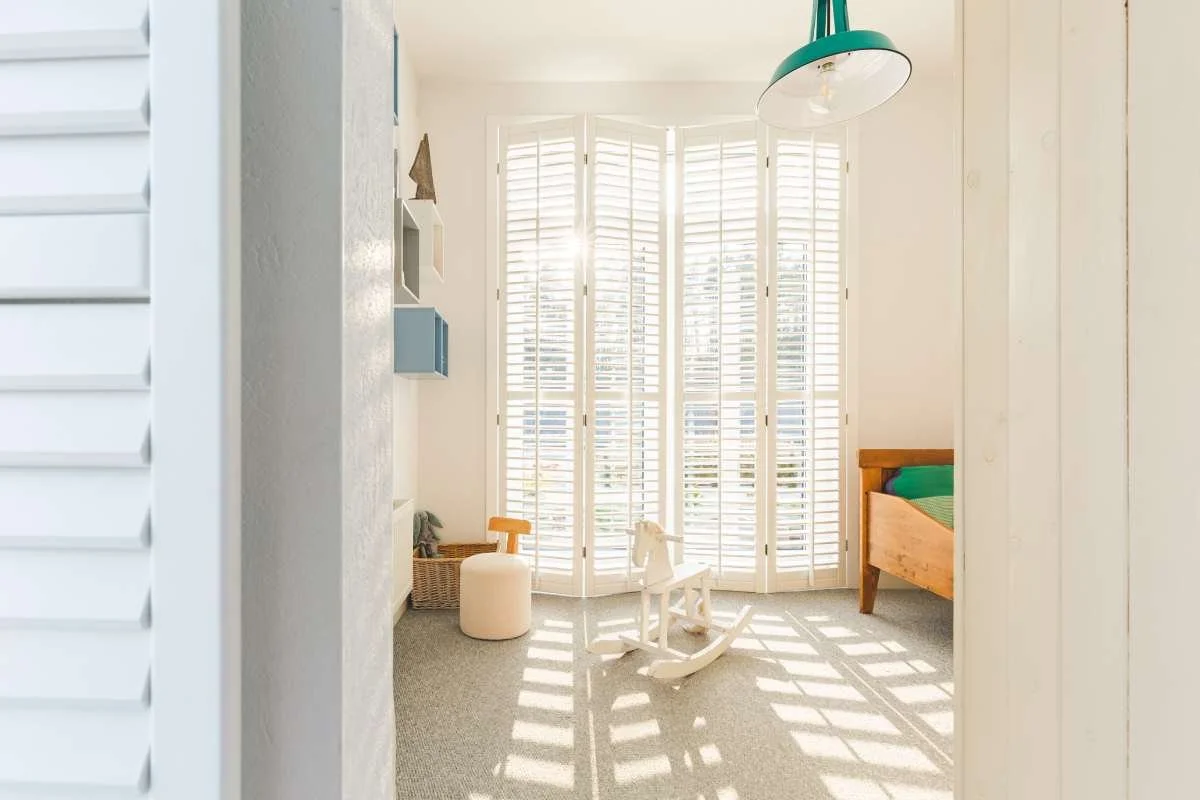
Full-Height Shutters: The All-Rounder
For most rooms in a Perth home, full-height is the standard recommendation, and for good reason.
Where they work best
• Bedrooms — you need the option of a full blackout, particularly for shift workers or anyone on the western side of the house copping the afternoon sun.
• Living and family rooms — full coverage gives you complete privacy from the street at night without needing curtains as a backup.
• Home theatres and media rooms — partial coverage defeats the purpose; you need the whole window blocked out.
• Street-facing windows — anywhere passers-by or neighbours have a direct line of sight into the room.
The trade-off is cost. Full-height shutters use more material and, depending on the height of your window, may need a tier-on-tier split to keep each panel a manageable size — which adds hardware and a bit more to the quote. For a large window, I’ll often recommend tier-on-tier over a single full-drop panel anyway, simply because it lets you crack open the top louvres for light while keeping the bottom closed for privacy. It’s the best of both worlds, just at full height.
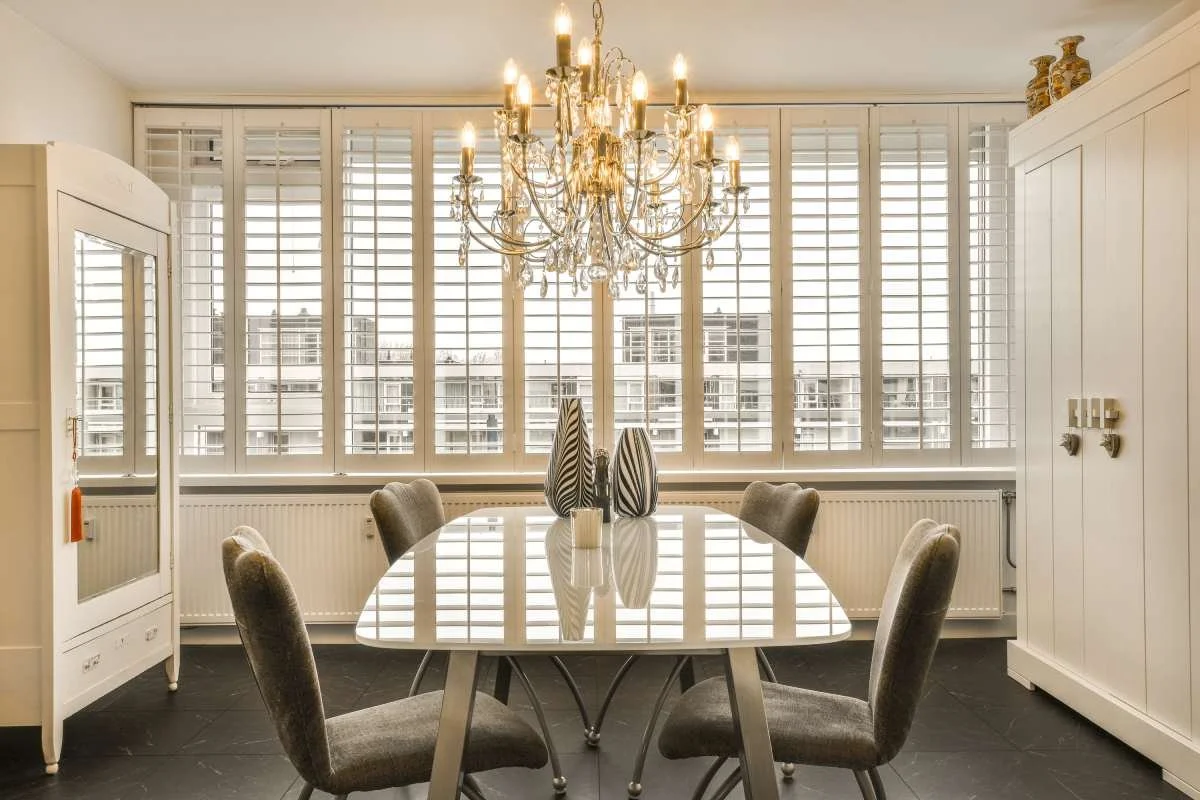
Café-Style Shutters: The Light-First Option
Café-style shutters get their name from the look you’d see in an old European café window — lower half shuttered, upper half left open to the room and the world. They’re a deliberate aesthetic and functional choice, not a budget shortcut, although they do tend to come in cheaper simply because there’s less material involved.
Where they work best
• Kitchens — especially over a sink or benchtop, where you want privacy from the footpath but don’t want to lose natural light while you’re cooking.
• Front-facing living rooms in character homes — café shutters suit the proportions of older Perth homes in suburbs like Mount Lawley and Subiaco, where tall, narrow sash windows were the original style.
• Home offices and studies — you get privacy at desk height while still keeping the room bright.
• Ground-floor windows where you want to retain a view — the open top section means you can still see greenery, sky, or a garden outlook from a standing position.
Where café-style falls short is anywhere you need full privacy or full blackout. Bedrooms are the classic mismatch — I’ve had more than one client try to retrofit curtains above café shutters after realising the streetlight outside was shining straight over the top of the panel at night.
From the Toolbox: A lot of installers will quote café-style purely because it’s the cheaper option for the room, without asking what's happening behind the window at 9pm. Before you commit, stand in the room at night with the lights on and check what someone outside could actually see over the top of a café panel. If the answer is “more than I’m comfortable with,” go full-height.
Full-Height vs Café-Style: At a Glance
| Feature | Full-Height | Café-Style |
|---|---|---|
| Privacy | Complete, top to bottom | Lower half only |
| Light & view | Adjustable across the whole window (more so with tier-on-tier) | Upper section always open — maximum natural light |
| Blackout capable | Yes | No |
| Typical cost | Higher (more material, often tier-on-tier) | Lower (less material) |
| Best for | Bedrooms, theatres, street-facing living areas | Kitchens, studies, character-home street windows |
Can You Mix Both in the Same Home?
Absolutely — and most of the Perth homes I work on end up with a mix once we go room by room. It’s common to see full-height tier-on-tier shutters in the bedrooms and living areas, with café-style over the kitchen sink or in a front-facing study. The trick is making sure the frame colour, louvre size, and material stay consistent across the house, so the two styles read as a deliberate design choice rather than a mismatched afterthought. If you’re working through that decision room by room, it’s worth pairing this with our guide on louvre sizing, since wider louvres tend to suit the more open, light-first feel of café-style panels, while finer louvres often complement the more traditional full-height look in a character home.
What About Tier-on-Tier as a Middle Ground?
If you like the idea of café-style — light up top, privacy below — but you’re not ready to give up the option of full blackout, tier-on-tier full-height shutters are worth a serious look. They’re two independently operable panels stacked within the full window height, so day to day you can run them exactly like a café shutter, louvres open top, closed bottom, but you retain the ability to close the whole thing off at night or during a hot western sun. It costs more than a true café-style install, but for a lot of clients it removes the need to choose at all.
The Bottom Line
There’s no universally “better” option here — it comes down to what each room is actually for. If a room needs to go fully dark or fully private at any point — bedrooms, theatres, anything facing the street — go full-height. If the room’s priority is light and outlook, and privacy is only a daytime concern, café-style will do the job for less.
My advice to every client is the same: walk the house room by room before you order anything, and think about how you actually use each space rather than copying what looks good in a photo. Get in touch with Perth’s Boutique Plantation Shutters and we’ll talk through which rooms suit which style, measure up properly, and make sure whatever goes in works for the way you actually live in the house — not just how it looks on day one.